
Ontdek de collectie
Kunstmuseum Den Haag has a treasure chamber of over 160.000 pieces of art. Here we work on making the highlights from this collection available online.
Base Line
Music Meets Art

A feast for the eyes and ears! In the spring of 2026, Kunstmuseum Den Haag will be making some noise. To celebrate the 200th anniversary of the Royal Conservatoire, the exhibition Base Line - Music Meets Art brings together the worlds of sound and vision. After many years, the Kunstmuseum is once again displaying – and playing – part of its remarkable collection of musical instruments. Some very special objects will be heard once again.
Japanese prints depicting musicians, forgotten women composers back in the spotlight, musical tones you can smell and feel, visual artists showing how their work is influenced by music. In a rich public programme, musicians and communities from The Hague contribute to events that transcend national borders and time periods.
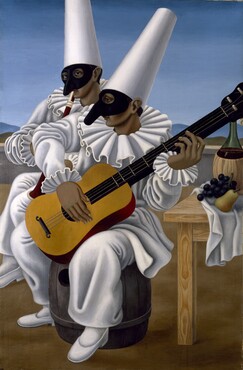
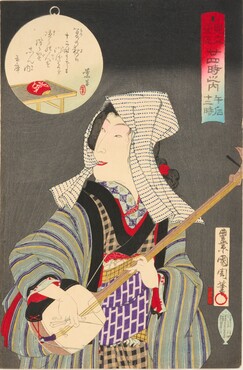
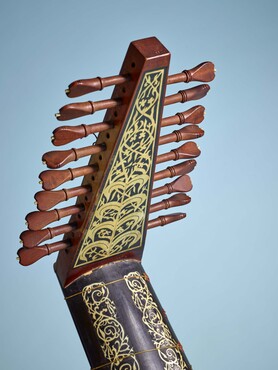
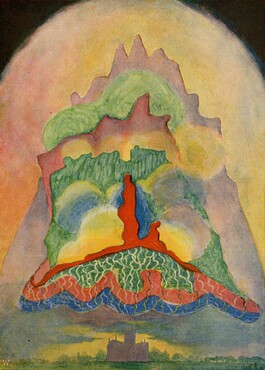
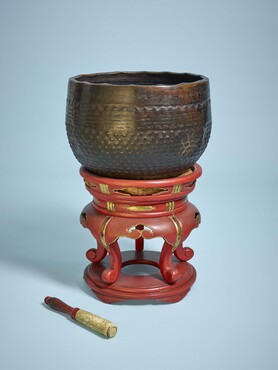
Music instruments find new life
For the first time in decades, Kunstmuseum Den Haag will display a portion of its remarkable collection of thousands of musical instruments – simultaneously the bass line and baseline for this exhibition. A selection of instruments from many eras and from all over the world can be admired. The displays draw connections between the instruments and their depictions in modern art. Works by contemporary artists Derrick Ofosu Boateng, Peter de Cupere, Tara Fallaux, Germaine Kruip and Dina Lebbar - who have their own connection to music and the multisensory - can also be seen.
New narratives
Sounds and imagery alternate and combine to form a multisensory exhibition that offers space for new narratives to unfold. One such narrative is that of previously unknown artist Eugenia MacFarlane, whose pioneering work deploys colour and form to express movement, emotion and music. Portraits of ‘forgotten’ female makers feature luminaries such as Surinamese composer Majoie Hajary; women’s rights activist, inventor and pianist Mary Hallock-Greenewalt; dance pioneer Lili Green; and Henriëtte Bosmans, a concert pianist and one of the most important Dutch composers of the first half of the 20th century.
Synaesthesia
Visitors to the exhibition will feel, smell, hear and see the inextricable connections between music and visual art, especially abstract art. The music is visualized in colours and lines, demonstrating the nature of synaesthesia, a phenomenon where the senses ‘overlap’ one another. And if you don’t actually have synaesthesia, don’t worry: you can still experience the music, dance, aromas and colours.
The exhibition Base Line - Music Meets Art is made possible by Mondriaan Business Club, Gemeente Den Haag, VriendenLoterij, Royal Conservatoire The Hague and HIIIT The Hague.
The public programme of Base Line is made possibile by CultuurSchakel.
